
Taylor K-2006 TEST KIT Saltwater
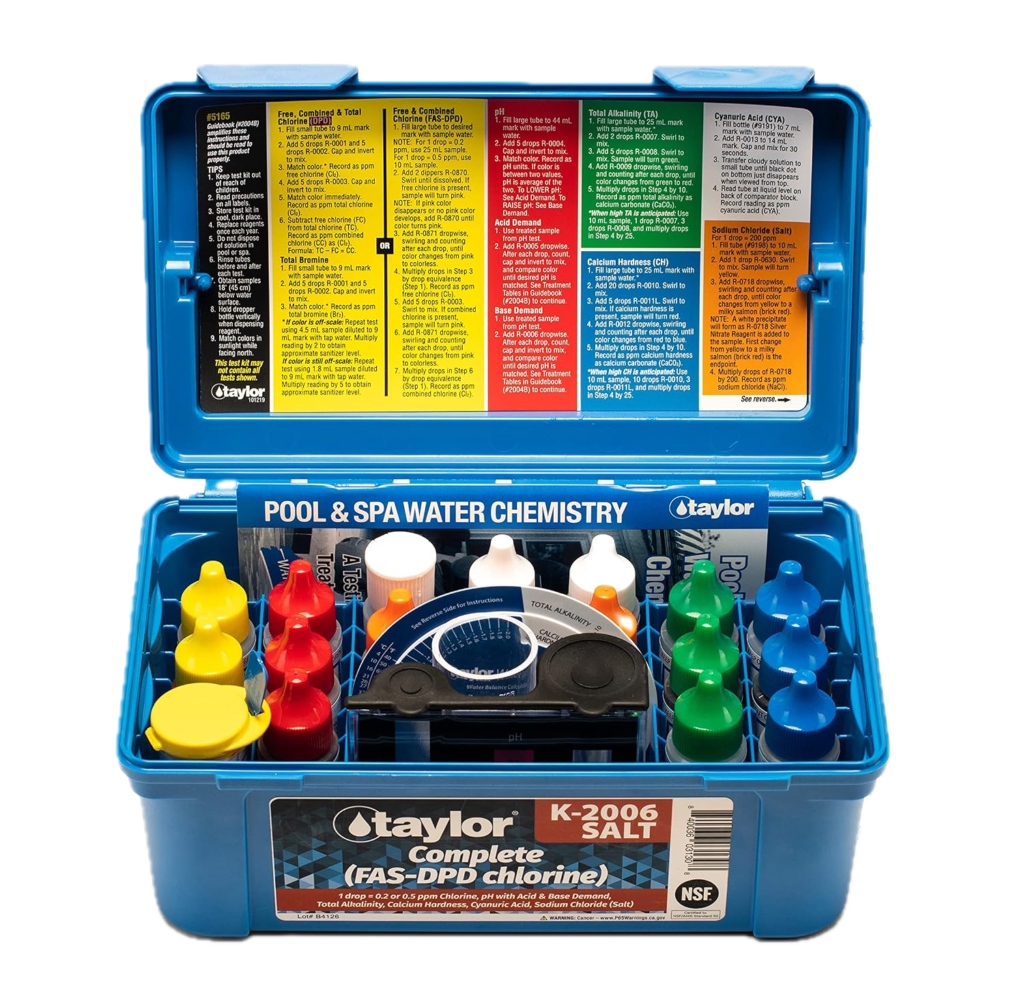
Taylor K-2006 TEST KIT Saltwater FAS-DPD, Tests Free & Combined Chlorine, Sodium Chloride, pH, Acid/Base Demand, Alkalinity, Hardness & Cyanuric Acid
This is the saltwater version of the Taylor K-2006, and it’s the one to choose if you run a salt system. The Taylor K-2006-SALT FAS-DPD Test Kit includes everything in the standard K-2006, plus a salt test: free and combined chlorine by FAS-DPD titration, pH with acid and base demand, total alkalinity, calcium hardness, cyanuric acid, and sodium chloride.

- Reliable Results In Seconds – Everything you need to test your saltwater pool or spa is conveniently packaged in the han…
- Quick & Easy to Use – Simply collect your water sample using the comparator and add the appropriate testing reagents to …
- Pool & Spa Test Kits Built to Last – With testing kits built to last, you’ll find yourself needing to replace your Taylo…
What the Taylor K-2006 Measures
The Taylor K-2006 is a pool and spa water testing kit designed for a detailed picture of water chemistry. Its FAS-DPD chlorine test measures free chlorine and combined chlorine, helping you distinguish active sanitizer from chlorine that has already reacted with contaminants. The titration method provides a precise reading across a useful range, which is especially helpful when routine test strips do not offer enough detail.
The kit also tests pH, total alkalinity, calcium hardness, and cyanuric acid. Taken together, these results help pool owners assess sanitizer levels, water balance, and the conditions that can affect comfort, equipment, and surface care. Always check the included instructions and reagent labels, since correct technique and the appropriate sample size matter for dependable results.
Why FAS-DPD Testing Is Useful
With FAS-DPD testing, a measured water sample changes color when reagent is added. The tester then adds titrant drop by drop until the color disappears, using the number of drops to calculate the chlorine concentration. This clear endpoint makes it easier to obtain a useful numerical result than relying on a rough color comparison alone.
Testing both free and total chlorine can also reveal combined chlorine: the difference between the two readings. If combined chlorine is elevated, it may be a reason to investigate water conditions and follow appropriate pool-care guidance. A test result is one part of that decision, not a substitute for the product directions or professional advice when readings remain unusual.
Getting Consistent Results
Use clean test cells, measure samples carefully, and follow the specified order and amount of each reagent. Keep bottles capped and stored as directed, away from heat and sunlight, and replace reagents when expired or compromised. Rinse equipment after use to reduce contamination between tests.
Test regularly, especially after heavy use, rainfall, or adding treatment chemicals. Record results over time rather than making large adjustments from a single reading. The Taylor K-2006 can support informed maintenance, but reliable results depend on fresh reagents, careful handling, and interpreting every measurement in context.