
AquaChek Monopersulfate Test Strips
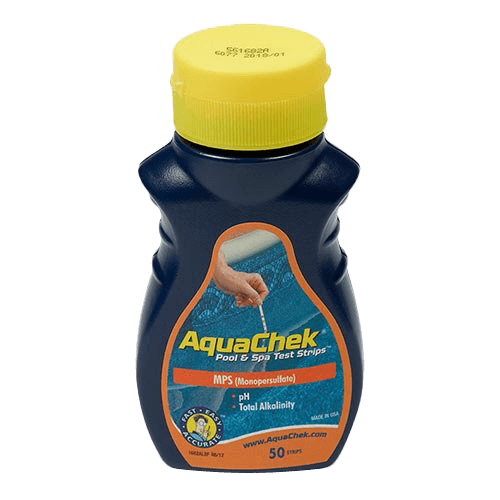
AquaChek Monopersulfate Test Strips for Pool or Spa-561682
If your pool or spa uses a mineral purification system or a non-chlorine monopersulfate shock, a regular chlorine strip won’t tell you what you need to know. AquaChek Monopersulfate Test Strips (561682) test three things in one dip: monopersulfate (MPS), pH, and total alkalinity. MPS is the oxidizer used in systems like Nature2, SpaFrog, and PoolRx, and it can also be used as an oxidizer in brominated pools and spas.

- Test Type: Alkalinity, Monopersulfate (MPS), pH
- Test Style: Strip
- Manufacturer: AquaChek/Hach
Why Test for Monopersulfate?
AquaChek monopersulfate test strips help pool and spa owners check the level of non-chlorine shock, also known as potassium monopersulfate (MPS), in treated water. Testing can show whether MPS is present at an appropriate level after use, helping you make informed decisions about routine water care. Because pools and spas differ, always follow the product label and your sanitizer’s instructions rather than relying on a single reading as a complete measure of water quality.
How to Use the Strips
For a useful result, begin with a clean, dry hand and remove one strip without touching the test pads. Dip it into the water as directed on the package, then hold it level and compare the color with the chart at the stated time. Timing matters: checking too early or too late can make colors harder to interpret. Keep the container closed between uses, store it in a cool, dry place, and check the expiration date. Moisture, heat, or old strips may affect performance.
Reading Results in Context
Match the pad to the corresponding scale under good lighting. If the shade falls between two values, consult the package guidance instead of guessing. A monopersulfate strip measures the parameter it is designed for; it does not replace tests for sanitizer, pH, alkalinity, or other water-balance factors. Use the appropriate test methods for those readings, and consider testing more often after heavy bathing, rainfall, or a water-treatment adjustment.
Good Testing Habits
Record readings over time so you can spot changes and respond consistently. If a result is unexpected, repeat the test with a fresh strip and confirm that you followed the directions. Adjust treatment only according to the chemical manufacturer’s instructions, and never mix chemicals or add them by guesswork. When readings remain unclear, consult the strip packaging, your pool or spa professional, or the product maker. Careful testing supports clearer decisions and helps keep water care predictable.